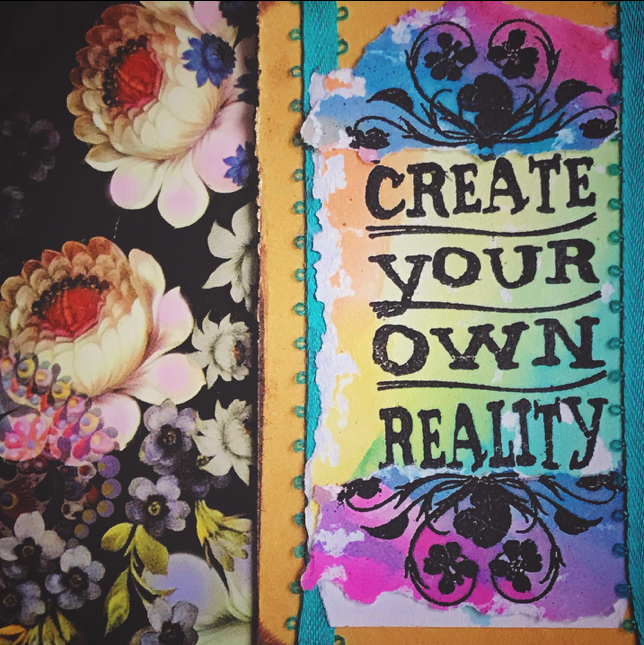

Grand Canyon: Download and Print Bookmarks

grand canyon printable bookmarks preview

I climb the granite to its summit, and go away over rust colored sandstones and greenish yellow shales…I climb so high that the men and boats are lost in the black depths below, and the dashing river is a rippling brook; and still the there is more canyon above than below. All about me are interesting geological records. The book is open and I can read as I run.

As promised, here are some printable bookmarks featuring the Grand Canyon. Just click the preview image above to download the PDF file. Print on cardstock or regular paper and cut them out. Laminate or cover with clear contact paper, or not. Add a tassel and beads. Or not. Stick in books as needed.

Click here to download the PDF.

Enjoy, and happy new year!

P.S. The quote is from the journals of John Wesley Powell, one fo the earliest non-native explorers of the Grand Canyon, dated August 18, 1869.

Year’s End Thanks

Temple View

I always enjoy looking over the search engine terms that have landed people on this site. Usually predictable, there are always a few surprises in the batch that leave me scratching my head.

For example, sometime in the past year, someone has visited while searching for information on:

  • amusement park ride design ergonomics
  • interpersonalmelo (what?)
  • grocery tattoos
  • rabindranath tagore wallpaper
  • cozy myster set in early 20th century england
  • 2

That’s right, someone searched for “2″ and ended up on my website. Three someones, to be precise. What’s up with that? And what in the heck is a grocery tattoo?

By far the most common search that landed people here was some variation of “bookmarks to print” or “knight paper doll”, both printables I made available more than a year ago. Creative journaling and lettering tends to generate a fair percentage of traffic. (I can’t say “a lot of traffic” because the tiny bit these days hardly qualifies – alas the languishing numbers of a barely active blog!) I’m happy to see these results here, because I feel like I have good resources to offer the seekers – I hope they enjoyed what they found.

However, I feel like I must extend my apologies to the person looking for “amusement park ride design ergonomics” because I doubt he found anything useful to help his search here!

Canyon Scape

Anyway, it’s that time of the year when I want to thank everyone who visits the page, regularly readers or random visitors. I have occupied this little space on the web for a long while, sometimes more actively than others, and I appreciate everyone who stops by for whatever reason. I wish you all the best in the coming year and hope to see you again soon!

P.S. The photos are from my recent trip to the Grand Canyon. After looking at the search term results, I have decided a second set of printable bookmarks are in order, featuring some of these shots. Look for them in the next couple of days!

A Pirate is a Pirate, or Maybe a Tiger

stock photo! tiger sticking out his tongue at you

Since C.S. Lewis’ birthday was celebrated this past week, and Ang Lee’s movie based on Yann Martel’s The Life of Pi was just released in theaters, I thought it an appropriate time to dig up this essay, originally posted in 2006. There are potentially some spoilers herein, if you haven’t read the book or seen the movie – but since I haven’t seen the movie yet myself I don’t know if the narrative points I’m discussing here make it to the screen at all. And anyway, the whole thing is more or less about how with a well-told stories “spoilers” don’t matter anyway. 

Originally posted August2006.

A Pirate is a Pirate, or Maybe a Tiger

I’m a great believer in synchronicity, or meaningful cooincidence, so I don’t believe it was mere chance that I laid hands on a volume of essays by C.S. Lewis just a day after completing Yann Martel’s astounding novel, The Life of Pi.

I was just wandering around the library, looking for some papermaking books while the kids busied themselves in the children’s section, and there it was, perched on the end of a stack like it was just waiting for me to find it: C.S. Lewis On Stories and Other Essays on Literature. I slipped it under my arm with the other books I brought home that day because, well, I was hoping to find a topic I might write about here. I never expected that the title essay, “On Stories”, would explain in theory what had been demonstrated in practice in the novel I had just finished.

It will be hard to explain in full without providing spoilers from The Life of Pi, and since I don’t want to ruin anyone’s first read of the book, I’ll start with Lewis’ theory and then talk about the novel behind the split.

The basic premise of the essay is that there are two ways of reading “romances”, or stories read purely for pleasure. With plenty of personal anecdotes as evidence, he proposes that some readers are driven by pure excitement — it doesn’t matter what sort of danger is faced, so long as there is a constant, inscreasing level of fear.

For other readers, atmosphere or the sense of otherness, is a more important factor in their enjoyment of a story. You don’t have to guess which type of reader Lewis is, and I have to admit that, like him, I am of the latter sort. He tries not to denigrate the excitement-loving reader, but there is a subtle disdain for the type, which he associates with cinema and American “scientifiction” (this essay was first published in 1947).

The bulk of the essay goes on to elaborate on his preference for stories that rely on mood, atmosphere and language to provide pleasure instead of merely providing a series of exciting events. I’ll let his words speak more to the point:

Jack the Giant-Killer is not, in essence, simply the story of a clever hero surmounting danger. It is in essence the story of such a hero surmounting danger from giants. It is quite easy to contrive a story in which, though the enemies are of normal size, the odds against Jack are equally great. But it will be quite a different story. The whole quality of the imaginative response is determined by the fact that the enemies are giants. (page 8)

He makes the same point about pirates in the next paragraph, and then later:

I have sometimes wondered whether the ”excitement” may not be an element actually hostile to the deeper imagination. In inferior romances…we often come across a really suggestive idea. But the author has no expedient for keeping the story on the move except that of putting his hero into violent danger. In the hurry and scurry of his escapes the poetry of the basic idea is lost. (page 10)

And later yet again:

Good stories often introduce the marvellous or supernatural, and nothing about Story has been so often misunderstood at this. Thus, for example, Dr Johnson, if I remember rightly, thought that children liked stories of the marvellous because they were too ignorant to know that they were impossible…Belief is at best irrelvant; it may be a positive disadvantage. (page 12)

While he does not explicitely state the point (it’s couched in examples too numerous to quote), the purpose of the marvellous in a story is united with the purpose of Art itself: “to present what the narrow and desperately practical perspectives of real life exclude.” (page 10)

Which is why, I expect, that I have always favored fiction with some element of the fantastic. Real life is narrow and desperate enough as it is, right?

How often a person re-reads favorite stories is an indication of whether or not they read for pure excitement or if their imagination is being stimulated by a sort of poetry:

The re-reader is looking not for actual surprises (which can come only once) but for a certain surprisingness…In the only snese that matters the surprise works as well the twentieth time as the first. It is the quality of unexpectedness, not the fact that delights us. It is even better the second time. Knowing that the ”surprise” is coming we can now fully relish the fact that this path through the shrubbery doesn’t look as if it were suddenly going to bring us out on the edge of the cliff. So in literature. We do not enjoy a story fully at the first reading. Not till the curiosity, the sheer narrative lust, has been given its sop and laid asleep, are we at leisure to savour the real beauties. Till then, it is like wasting great wine on a ravenous natural thirst which mearely wants cold wetness. The children understand this well when they ask for the same story over and over again, and in the same words. They want to have again the ”surprise” of discovering that what seemed Little Red Riding Hood’s grandmother is really the wolf. If is better when you know it is coming: free from the shock of actual surprise you can attend better to the intrinsic surprisingness of the peripeteia. (page 17)

(The above passage doesn”t relate directly to Martel — I haven”t re-read it yet — but I wanted to keep it for my own reference. But I do re-read my favorite books, and rewatch my favorite movies for that matter, and the pleasure only deepens over time.)

Thus, Lewis” “On Stories”. How does that apply to Martel?

The Life of Pi, if you are not familiar with it, tells the story of a teenaged boy, Pi (short for Piscine, the French world for swimming pool), who is stranded on a lifeboat with a tiger in the middle of the Pacific Ocean. The first third of the book tells of Pi’s life before the shipwreck, as the son of a zookeeper in India who discovers not just one religion but three, which he practices simultaneously. In alternate chapters we also hear about Pi’s life following the shipwreck, from the point-of-view of the person who I’ll call “the narrator” even though Pi’s story is all told in first person. Through the narrator’s eyes, we see Pi settled in Canada, content in the life he has created for himself. In fact, the narrator tells us bluntly at the end of this section of the book, “This story has a happy ending.”

By removing the ultimate threat, eliminating the question of whether or not Pi will survive his ordeal, the book immediately leaves the realm of stories read purely for excitement. Because we know where the story is going to end, we are more able take notice of the journey itself, and to appreciate the scenery along the way (in both the literal and metaphoric sense). I don’t think it’s necessary to elaborate on this, the middle section of the book, other than to say that Martel manages effectively to surround you in his reality. Could someone really accomplish what Pi does during his nearly-300-day exile on the ocean — with or without a tiger? I don’t know. But Martel”s storytelling ability lets you believe it is possible.

It is the third part of the book that truly demonstrates Lewis’ theory, though. What happens to Pi after he is washed ashore in Mexico is told primarily through the “transcription” of an interview by two representatives of a Japanese shipping company, trying to ascertain the cause of the shipwreck. When they disbelieve Pi’s story of his long journey with the tiger, he offers them an alternative version, one where humans take the places of the animals that had filled his story before. While the original story was filled with marvels, the second is filled with horrors. Sadly, it is the second that is more realistic. But is it true? That”s left to the reader to decide.

Hopefully you can see where I’m going with this now. The alternative version of Pi’s story could have been just as exciting as the original, a gripping human drama of fear, greed and murder. But Martel was not trying to create an exciting story. We know that from the start because the threat of danger is removed by the fact of Pi’s survival, by the knowledge of the happy ending. Neither is he trying to convince us that this remarkable journey is a true story. The final chapters as much as say, “Here”s what really happened.”

Like Lewis’ giants and pirates, a tiger is a danger beyond the ordinary, a danger that takes us out of “narrow and desperately practical perspectives of real life” where it is easier to contemplate human nature without judgement. When Pi’s antagonist is a tiger, we admire is strength in the face of adversity. When his antagonist is human, we can only feel pity and shame for humanity in general.

At the same time, Martel has made a commentary on every story, every history. What is true? What is True?

“Whch story is the better story?” Pi asks his interrogators, and they have to conclude that Pi’s story, with the tiger, is better. And in their minds, that makes it true.

P.S. The photo is not mine – all my tiger photos are on currently inaccessible hard drives and not very good anyway. This is a stock photo, and it made me laugh.

Place and Character

Scout

Completely unrelated to this pic, there is a new City of Bridges post available: read The Color of Light. I am still feeling my way into this world, these characters. Trying to find a balance between an engaging narrative style and the sort of poetic descriptive voice that catches my breath as a writer. A balance between character and place, too.

Actually, when I think think about my writing in those terms, this photo isn’t really unrelated at all, is it? It was the tree that caught my eye, the way the light illuminated the leaves amongst the shadows of the grove. It is the tree that is in the camera’s focus. But it is my daughter there, in the background, that makes the picture interesting. Blurred and indistinct as she may be, she adds motion and life to what would otherwise be a static image. Pretty, maybe. But not really interesting.

I shall have to think about that as I venture into the next installment of City of Bridges. There must be a way to highlight the fascinating, colorful place that my city is, without losing sight of the people who make it move.

Summer Making

Ready

Early last summer, I suffered a catastrophic failure of creativity. I’m not going to try to get into the causes (if I can even understand them myself) but the simple fact is I stopped making thing. As someone who has always made things, this was pretty traumatic.No photos, no journal pages, not even doodling in a sketch pad. None of the arts or crafts that have held my interest for the past few years. Worst of all was not being able to write.

As someone who has always practiced one craft or another, this prolonged involuntary hiatus was troubling, to say the least. I’d go to the craft store and wander around aimlessly, looking for something to fill my hands and my time. But inspiration eluded me. Nothing interested me, not ink or pens, paper or paint, yarn or beads. I was one big… blah. Intellectually, I missed the thrill of creating, but the urge to create something myself was missing.

What to do? That’s where the yarn came in. Sometime in June, it dawned on me that I never used to sit in front of the TV without having something in my hands to do. Maybe, I thought, if I just get something to work on while I watch TV, the rest of it will start to click into place. I figured crochet, which is mechanical enough not to require much in the way of creativity, but results in lovely and practical items that – bonus – happen to make great gifts. Creating something for someone else is a great inspiration for making something.

Chocolate Chip Raspberry Swirl Ice Cream

I wouldn’t say that my inspiration experiment was an explosive success, but I am finding some spiritual relief in crafting things again. I’m even working on a new novel, bit by bit.

I made chocolate chip raspberry swirl ice cream. Does that count?

Captured Bottle

Now, the bottle is something else. The bottle was an act of pure inspiration I can, ultimately, blame on the cats. Maybe I’ll tell the story some day, but for right now the important par of the story is that, in wanted to ornament this bottle (and a couple of others that are in progress still) I ventured into the realm of chainmaille jewelry.

Now, I’ve done beading before, but this chainmalle thing is quite different, and fun too. I think the challenge of learning something new has piqued my interest in a way that other crafts haven’t been able to do for a while.

Byzantine Times Two

These are my first two bracelets, in what’s called a Byzantine weave. They’re made of aluminum rings and about 8 inches long (I have big wrists).

Barrel Chain Pendant

This one is bronze, which I choose because I wanted something to hang my dad’s pendant on. I love this weave, though I kinda wish I’d chosen a slightly smaller size – this is pretty heavy around the neck!

Anyway, I just wanted to check in here, and do a little show-and-tell with what I’ve been working on this summer. What about you? What new ways to express yourself have you discovered lately?

Tim Burton’s Beauty and the Beast

I wrote this partial post months ago, and never got around to finishing it. So we’re trying something new: an interactive blog where you get to write your own conclusion! Seriously, I was inspired by this topic when I first started writing, but it’s been too long now for me to remember what I was going to say to elaborate on the final statement. So take this for what it is, in it’s non-scholarly, unfinished state.

Edward Scissorhands posterIt’s been a long time since I’ve watched Edward Scissorhands, longer than my 15-year-old daughter has been alive, I’m sure. But I’ve been wanting to show it to her and my younger daughter for a while now—they’re fans of some of Tim Burton’s other work (Nightmare Before Christmas, Alice in Wonderland) and I thought they’d enjoy the not-too-dark humor and tragedy of Edward. Fortunately, it lived up to my expectations as an entertaining and thought-provoking film (not everything holds up well to the mirror of memory) and the girls enjoyed it much.

What surprised me was when I found myself thinking, “Wow, this is just like Beauty and the Beast, only reversed.” There’s probably no great revelation in this; I’m sure some cinema and/or folklore student in the past 20 years has written a thesis on the subject. But as a non-academic I can forgo the research and just blather on as if I’ve been inspired with original genius.

The character that brought the comparison to mind was actually Jim, the heroine’s boyfriend. Edward is the Beast, of course, and Winona Ryder’s character, Kim, is Beauty. Tim, played by Anthony Michael Hall (a roll that serves as a good bridge from the nerd of the Brat Pack roles), is Winona’s boyfriend. Just like Gaston in Disney’s Beauty in the Beast, he is driven by a sense of entitlement, enraged by everything the Beast represents, and threatened by the heroine’s attraction to the Beast. He even falls to his death from the castle parapets, just like Gaston does. You might even accuse Burton of copying the Disney film in this regard, if Edward Scissorhands movie hadn’t come out a year earlier.

So let’s talk about the reversal. In the original tale, Beauty goes to live with the Beast in his magical realm. In Edward Scissorshands, the Beast is brought out of the magical realm into the world of the everyday. If you listen to my daughters, there’s nothing “normal” about the suburban neighborhood that adopts Edouard, it’s clear that Burton created a setting in which “Normal” has been taken to excess. I think my daughters were right to be more creeped out by the rows of suburban dwellings, each one exactly the same as the next, than they were by the spooky mansion on the top of the hill. They’re just too young to fully appreciate the cultural satire Burton evokes.

Of course, it’s Beauty’s mother that brings Edward home, whereas Beauty’s father (in the original tale) is all to quick to sell off his daughter to save his own life, suggesting something about the nurturing feminine archetype.

But the real difference that happens in the reversal of the story is that Beauty fails to successfully transform the Beast, even though she does what she’s supposed to do by confessing her love.

On Deck

Dock

1.

If I were really clever, I’d call this post something like “Sailing into the New Year” or something, I dunno, adventury. But I don’t feel up to building that sort of extended metaphor right now. Feel free to imagine it for yourself.

So, I got the Lego Pirates of the Caribbean game for Wii* this Christmas, which inspired me to force my children** to watch the original movie with me in the break between Christmas and New Years. The next day, I kid you not, I saw on the news that one of the ships used in the movie was going to be tied up in Newport Beach for a few weeks, and open for tours. My mom inherited a love for tall ships from my dad, so it was no great effort to convince her to come along. So Saturday, we all piled into the car and headed for Newport.

The Lady Washington, which played the Intrepid in the movie (the ship that Jack and Will stole), was tied up alongside the Hawaiian Chieftain at the Newport Sea Base—literally side-by-side, so that you had to walk across the one to get on the other.

It surprised me how crowded the ships were, though I’m sure the effect was intensified by how small the ships actually are. It’s kind of amazing to think about people actually crossing oceans on these tiny matchboxes. The original Lady Washington (of which this is a modern replica) was the first American ship to round the Horn, and it would take me all of thirty steps to walk from end to end.***

But even though the visitors were packed in elbow-to-elbow on deck, it was in a way reassuring to see so many people with an interest in history. Maybe it was the appeal of the “movie star” ship that brought them to the dock, but they must of have nevertheless been inspired by the adventuring spirit of long ago.

Rigging

2.

The top photo is mostly the Hawaiian Chieftain, though you can see masts and spars and rigging from the Lady Washington behind her.

These pictures kind of suck, because it was so crowded it was hard to position myself for good shots, let alone people-free shots. Plus, since I haven’t been using my camera a lot lately, I totally forgot to check the ISO and ended up shooting them at 800, which is way to sensitive for noon-time photography. Even the good shots are full of noise that I don’t have the post-processing mojo to get rid of. I filtered and actioned the heck out of them in order to disguise the imperfections.

Still, it feels good to start the new year off with some new photos. Next ones will be better.

Sail

* The Lego games for Wii are my favorites, as they don’t require an excessive amount of manual dexterity, it doesn’t really matter if you die a lot, and bashing up the scenery is an excellent stress reliever. The complete Star Wars remains my favorite, though POTC was fun until it developed a glitch. I am keeping my fingers desperately crossed that the recent deal to produce Lord of the Rings Lego means there will be a video game down the line, too.
** I only force my kids to do things I know they’ll enjoy, and of course they did.
*** Of course who would walk? They all swung on the rigging naturally! Swash and buckle!