

My everyday handwriting is mostly legible, at least to me. But I don’t always enjoy going back to read it when I am done. Sometimes this is fine, like when I am writing morning pages and don’t expect to go back to read them.
But more and more, as I discover both the pleasures and benefits of writing by hand (especially with a really good fountain pen), more and more I find it satisfying to go back to what I have written for review or transcription.
I came across French cursive while looking up videos for how to improve my handwriting. While I strongly believe in the motto of AWC — that penmanship doesn’t matter — I thought handwriting practice would be a good hobby that combined my new interest in fountain pens with the added benefit of making my writing nicer to read.
There are two basic ways to improve messy handwriting. The first is to just write slow. By focusing closely on each letter as you write, it will become neater. But while slowing down every once in a while is fine, I can’t always spend an hour writing a single page (deadlines, am I right?). Before long, my brain is going to take off on an idea and my hand is going to follow, leaving behind nothing but an uneven, irregular scrawl.
The other method is practice sheets. I knew: Eww! The idea of practicing my handwriting letter by letter feels like stepping back in time 50 years and anticipating poor marks on my penmanship homework. I was not inspired to practice a skill I should have mastered in elementary school!
But then along came French cursive.
I shouldn’t have been surprised that the French have their own, artfully embellished script, but I was. And so pretty! Extra curls, a few unique characters — just different enough from modern American cursive to catch the eye without being completely unreadable.
Just enough different that practicing it feels like learning something new, not retreading lessons from my youth. It feels more like practicing an art form than practicing handwriting.
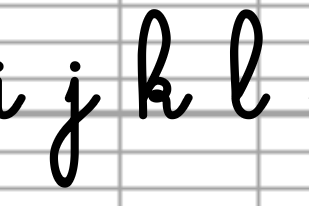
Here are some of my favorite features of French cursive:
Extra curls:
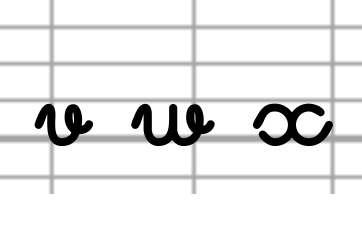
Very round:

Upright ascenders (no slant!):
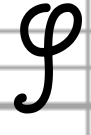
Capitals that just feel more French:

And some that make you wonder what letter they are anyway:
I have only been practicing French cursive for a little while, and when I use it my script still looks like a schoolchild’s writing. Sometimes the letter forms sneak into my journaling and other writing, but it’s inconsistent and imprecise. I don’t care! While I may have started because I wanted to improve my handwriting, I am continuing because it’s fun and creative and relaxing. Copying letter forms is both meditative and challenging (all those curls!). Sometimes I’ll put on a video while I knock out a row of Ks. Or I will copy a passage from a favorite book, which has the side benefit of helping me improve my craft as a writer — writing and handwriting practice at the same time!
I’m not going to teach you how to write French cursive in this post. I’m hardly good enough myself yet to presume to do so, and there are already plenty of references on line.
However, I have created some practice grids in different sizes that you can use if you want to give it a go yourself.
The lines on Seyes rule paper are divided into four even sections in order to practice the precise character height that is another feature of the script. Basic small letters all fit in the first section, while Capital letters and ascenders on small letters (such as h) go all the way to the third section, and all the descenders go down two sections. (I honestly don’t know what the vertical lines are for — probably to help control width, but I haven’t found any guidelines for that yet. If you know, drop a comment!)
I’ve made grids in four different dimensions that you can use to practice French cursive if you are inspired. Just print it out and use it under your writing paper to use as a guide. I usually hold mine down with a bit of washi tape. You’ll find the link below the cut.
Download French Cursive Practice Sheets
Have you ever tried learning to write in a different script? Share your experiences in the comments! I’d love to know any tips or tricks you have to pass on.
 This post was originally published in Spring 2026 on the Analog Writers Club. Since that publication has shut its doors, I have decided to republish some of the content here.